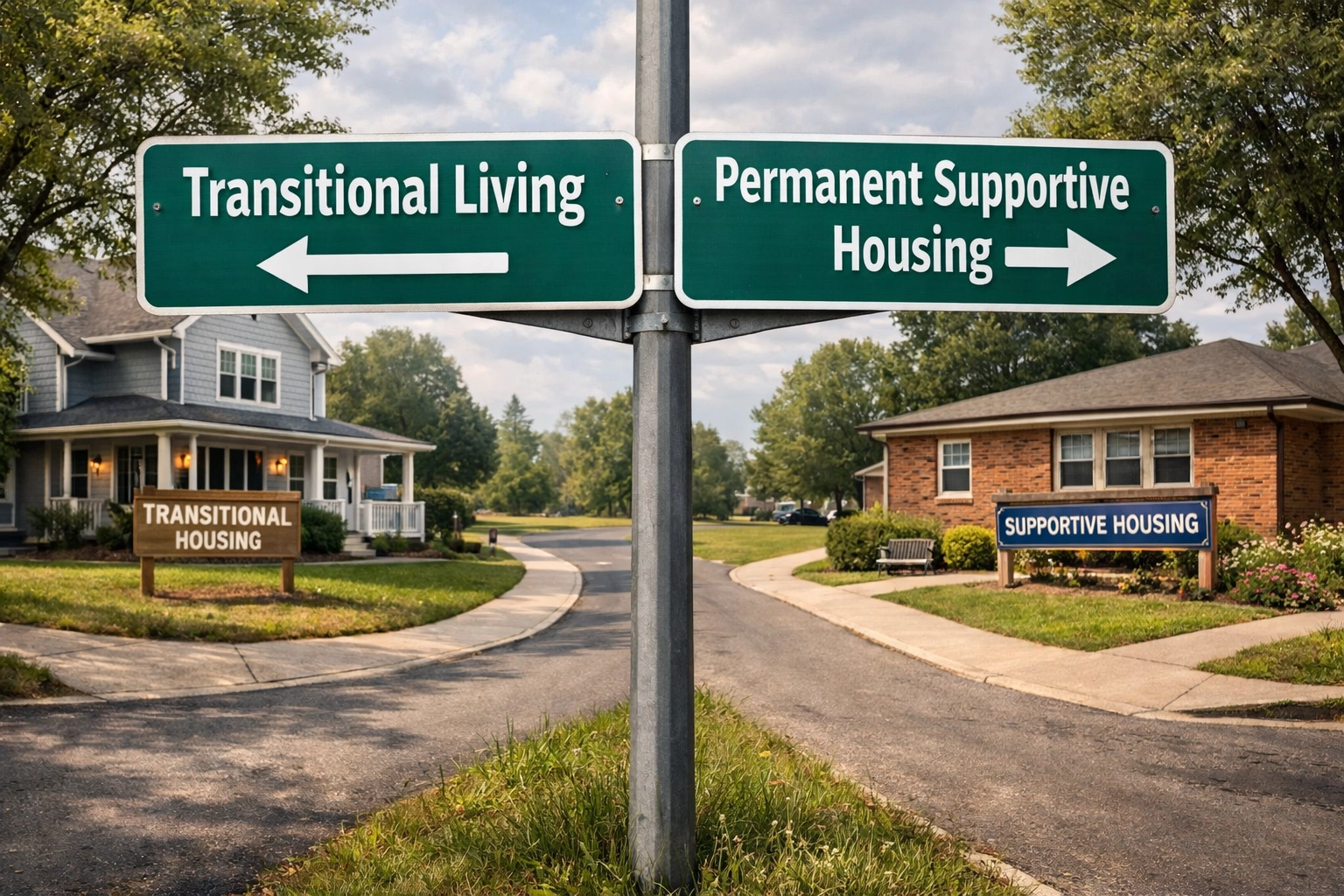
Securing a stable environment is the first step toward reclaiming independence. For individuals transitioning out of crisis, the options can be confusing. Two of the most common frameworks are transitional housing and permanent supportive housing. Understanding the distinction between these housing stability programs is essential for case managers, families, and individuals.
At Hosanna's Haven, we provide a professional supportive housing environment. Our model prioritizes dignity and forward progress. This guide outlines the differences between these paths and explains how our specific model serves as a bridge to long-term restoration.
Understanding Transitional Housing
Transitional housing is designed as a temporary solution. It serves as a middle ground between emergency shelters and permanent independent living. Typically, residents stay in these programs for a period ranging from six months to 24 months.
The primary goal of transitional housing is skill acquisition. These programs often focus on employment assistance, financial literacy, and sobriety maintenance. Residents are expected to move into their own housing once the program timeframe concludes. This model is effective for individuals who have the immediate capacity to return to full independence but need a structured environment to save money or resolve short-term barriers.

A realistic, live-action photograph of a clean, structured residential bedroom, emphasizing a safe and orderly environment for personal growth.
Understanding Permanent Supportive Housing
Permanent supportive housing (PSH) is a long-term or indefinite housing solution. It is primarily designed for individuals with chronic conditions that may prevent them from ever living entirely without support. This includes individuals with long-term disabilities, chronic mental health challenges, or recurring medical needs.
Unlike transitional programs, PSH does not have a mandated "move-out" date. The focus is on housing retention and health stabilization. Support services are often intensive and are provided on-site or through close coordination with medical professionals. PSH operates under the "Housing First" philosophy, which prioritizes getting a person into a home before addressing other life challenges.

A realistic photograph of a modern, well-maintained residential building exterior, representing a stable and permanent foundation for residents.
Key Differences at a Glance
When choosing between these paths, consider the following metrics:
- Duration: Transitional housing is time-limited (up to 2 years). Permanent supportive housing is indefinite.
- Target Demographic: Transitional housing serves those capable of eventual self-sufficiency. PSH serves those with chronic, long-term support needs.
- Intensity of Services: Transitional programs focus on exit strategies and job placement. PSH focuses on clinical stability and long-term health management.
- Operational Structure: Transitional programs are often highly regulated and may involve shared living spaces to encourage community-building.
The Hosanna's Haven Model: Supportive Housing Focused on Restoration
Hosanna's Haven occupies a unique space in the social services landscape. We identify as a professional, unlicensed supportive housing facility. We do not offer short-term emergency stays, nor do we rush residents toward an arbitrary exit date. Instead, we focus on the "bridge", the critical period where stability leads to restoration.
Our approach is built on three pillars: stability, dignity, and forward progress. We provide a high-standard living environment that functions as a professional for-profit service. This ensures that every resident is treated with the respect of a client in a well-maintained home.
Strategic Collaboration with Case Managers
We do not operate in a vacuum. We maintain active relationships with individual case managers and social workers. Our role is to provide the stable environment where their clinical and social work can take root. While we are an unlicensed facility and do not provide direct medical assistance, we welcome external medical providers into our home. Registered nurses, home health aides, and physical therapists are encouraged to visit and provide care for our residents within the comfort of their living space.
This collaborative model allows for a seamless transition for those leaving medical facilities. For more information on this specific transition, see our post on what happens when someone leaves the hospital with no safe place to go.
Unique Support Systems at Hosanna's Haven
Generic housing programs often lack the nuanced supports that prevent a return to crisis. At Hosanna's Haven, we have developed specific internal protocols to ensure no resident is left behind.
The Companionship Accountability Circle
Isolation is a major risk factor for housing instability. To combat this, we facilitate the "Companionship Accountability Circle." These are weekly talk sessions where residents gather to share experiences and goals. This is not clinical therapy, but a structured peer-support mechanism. It fosters a sense of belonging and ensures that every resident has a voice in the community. Accountability to one’s peers is a powerful motivator for forward progress.

A realistic photograph showing a small group of diverse individuals sitting in a comfortable living room setting, engaged in a focused and supportive conversation.
The On-Site Community Pantry
Financial fluctuations are a reality for many who rely on SNAP or SSDI benefits. There are often gaps at the end of the month when benefits run out, leading to food insecurity. To address this, we maintain an on-site community pantry. This resource is available to all residents, ensuring that no one goes hungry while waiting for their next disbursement. This safety net is a critical component of our commitment to resident dignity.

A realistic photograph of a neatly organized, well-stocked kitchen pantry with high-quality food items, reflecting the care and preparedness of the facility.
Reliable Transportation Services
Stability requires access to the outside world. We offer transportation services to ensure residents can attend medical appointments, meet with case managers, or fulfill professional obligations. Removing the barrier of transportation allows residents to focus entirely on their personal restoration.
Who We Serve
Our program is designed for individuals who require a structured environment but do not need intensive, 24-hour clinical supervision. We serve a diverse range of clients, all of whom are seeking a higher standard of living than traditional unlicensed homes provide.
To see if our environment is the right fit, you can view our detailed criteria for those we serve. We are a professional service and operate on a referral basis. We work closely with our referral partners to ensure every placement is a strategic match for the resident’s needs.
Why a Professional Model Matters
Hosanna's Haven operates as a for-profit, professional supportive housing service. This distinction is important. It means we are focused on the quality of the environment and the reliability of our operations. We maintain strict operational boundaries and scheduled communication to ensure the safety and privacy of all residents.
We believe that housing should not just be a roof; it should be a foundation for a better life. By combining a high-quality residential setting with strategic supports like the Accountability Circle and the community pantry, we provide more than just a place to sleep. We provide a path to restoration.

A realistic photograph of a professional office desk with a calendar and a laptop, symbolizing the organized and professional management of Hosanna's Haven.
How to Connect with Us
If you are a case manager or a family member looking for a stable, professional environment for a loved one, we are here to assist. Access to our facility is by referral and scheduled communication only to maintain the privacy of our residents.
- Learn more about us: Visit our About Us page.
- Explore our program details: Review Our Program for a full list of amenities and expectations.
- Contact us directly: If you are ready to discuss a referral, please reach out through our contact page.
Drop us a line to start the conversation about how we can support your client’s journey toward stability.
Privacy and Security Notice: Hosanna's Haven is committed to the privacy of our residents and partners. All inquiries are handled with professional discretion. We are an unlicensed supportive housing facility and do not provide medical, clinical, or psychiatric services. External medical providers must be coordinated through the resident’s individual case management team. For more resources, visit our main blog.