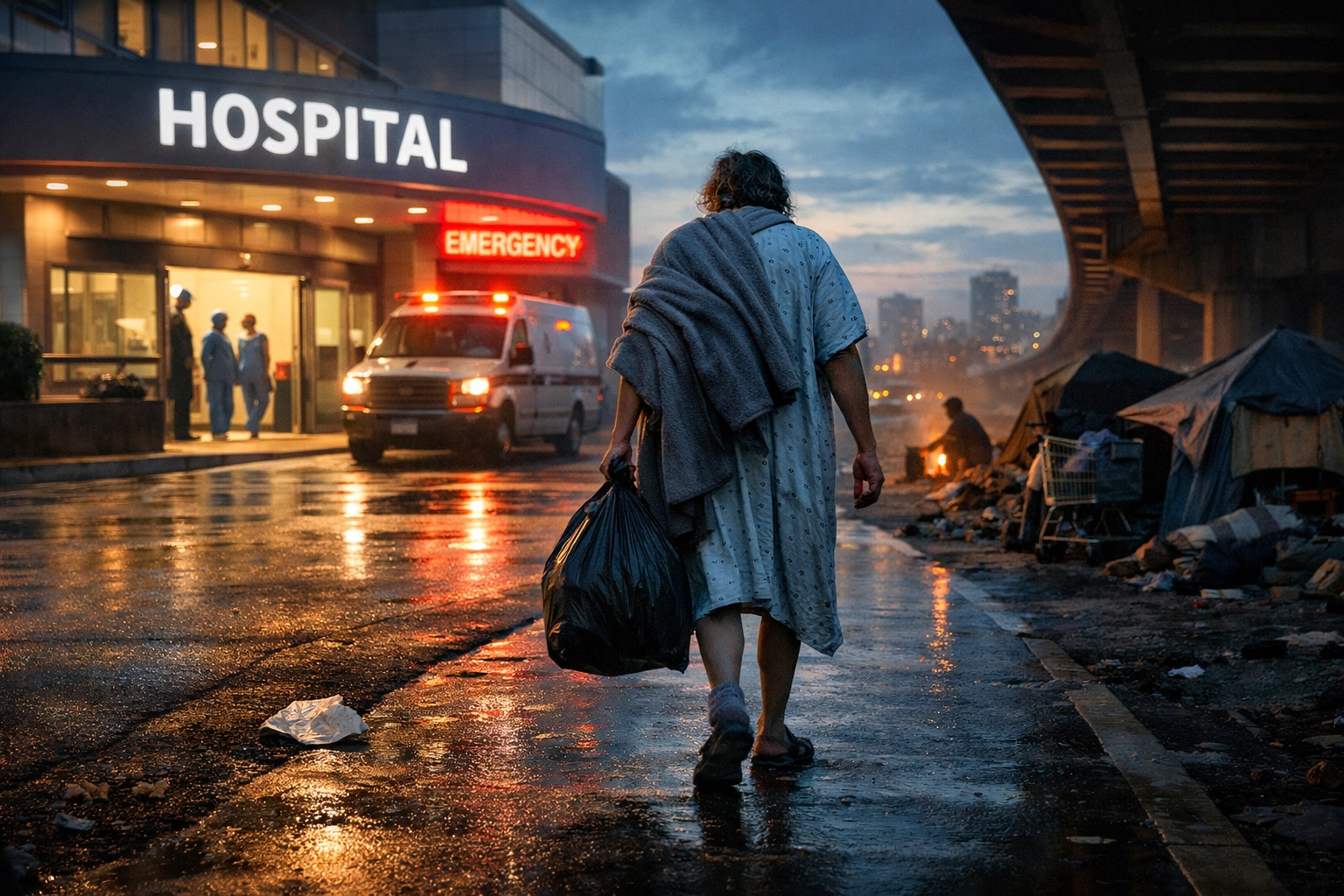
For many patients, the moment of discharge from a hospital represents a milestone of recovery. It is the point where medical professionals determine that the acute crisis has passed and the individual is "medically cleared." However, for those experiencing housing instability or homelessness, the walk through the hospital exit doors does not lead to a place of rest. Instead, it often leads back to the very environment that contributed to their illness or injury in the first place.
When a person leaves the hospital with no safe place to go, the medical clearance they received becomes a temporary reprieve rather than a permanent solution. At Hosanna's Haven, we recognize that physical healing cannot be sustained without environmental stability. The gap between clinical recovery and community reintegration is where the most vulnerable individuals fall through the cracks.
The Medical Reality of Housing Instability
The transition from a sterile, supervised clinical setting to the streets or an overcrowded shelter is a traumatic shift. Research consistently shows that individuals discharged to the street face significantly higher rates of morbidity and mortality. When a patient lacks a stable home, they lack the foundational requirements for post-operative care and chronic disease management.
Consider the basic requirements for recovery:
- Wound Care and Hygiene: Recovering from surgery or a physical injury requires a clean environment to prevent infection. In unsanitary or outdoor conditions, even minor incisions can lead to life-threatening sepsis.
- Medication Compliance: Many post-hospital treatments require strict adherence to medication schedules. Without a secure place to store prescriptions, medications are often lost, stolen, or damaged by the elements.
- Rest and Nutrition: The body requires significant caloric intake and undisturbed sleep to repair itself. Neither is readily available to those navigating the "nomadic" conditions of homelessness.

Without these necessities, the recovery process is not just delayed; it is often reversed. Patients frequently find themselves back in the Emergency Department within days or even hours of discharge, creating a "revolving door" that exhausts both the patient and the healthcare system.
The "Revolving Door" and Healthcare Efficiency
The systemic inefficiency of discharging vulnerable patients to the street is a significant burden on the social services and healthcare sectors. When a patient returns to the hospital shortly after discharge due to a lack of housing support, it indicates a failure in the discharge planning ecosystem, not necessarily a failure of the medical team, but a lack of available community resources.
Hospitals often face immense pressure to clear beds for new patients. Social workers and case managers are tasked with finding placements, but they frequently encounter strict "priority need" criteria that exclude single adults or those without specific qualifying disabilities. This leaves a massive population of individuals who are too healthy for a hospital bed but too fragile for the street.
Hosanna's Haven serves as a critical intervention in this cycle. By providing a structured, supportive housing environment, we ensure that the progress made during a hospital stay is protected and built upon. Residents can stay as long as they need to stabilize and prepare for their next life stage. Our focus is on ending the cycle of crisis by establishing a foundation of permanent stability.
Hosanna's Haven is a non-medical facility. We do not provide clinical care on-site. We do provide wraparound services through coordination, referrals, and structured support. We are fully open to residents receiving house visits from medical providers, including nurses and CNAs, when arranged by the resident and their care team.
Why Case Managers Look for Specialized Referrals
Hospital case managers and social workers are the front-line advocates for patients. They understand that a patient's medical chart only tells half the story; the other half is told by their living situation. When a professional seeks a referral for a patient, they are looking for more than just a bed. They are looking for a program that offers accountability, safety, and a clear path forward.

Case managers prioritize referrals to organizations that can offer:
- A Controlled Environment: A place where the patient is safe from the stressors of street life or the volatility of traditional emergency shelters.
- Referral Partnerships: Seamless communication between the hospital and the housing provider to ensure medical instructions are understood and followed.
- Holistic Support: Recognition that housing is the first step, but mental health support, recovery resources, and long-term planning are the subsequent steps.
For professionals looking to bridge this gap for their clients, our referral partners page provides the necessary information to begin the process. We work closely with social service providers to ensure the transition is managed with dignity and professional oversight.
Restoring Dignity Through Supportive Housing
At Hosanna's Haven, we believe that housing is not just a social service; it is a fundamental component of healthcare. Our program is designed to provide more than a roof. We provide a stable, structured place to live while residents take the time they need to regain footing and plan their next step.
When an individual enters our facility after a hospital stay, they are met with a structured environment that prioritizes their dignity. The psychological impact of having a private or semi-private, safe space to sleep cannot be overstated. It allows the nervous system to move out of "survival mode," which is a prerequisite for any meaningful mental health or substance abuse recovery work.
We focus on:
- Stability: Providing a consistent environment where residents know where they will sleep and eat each day.
- Restoration: Helping individuals rebuild their sense of self-worth and purpose after the trauma of illness and housing loss.
- Structured Success: Implementing rules and guidelines that foster personal responsibility while providing the support needed to meet those expectations.

The Hidden Housing Crisis After Trauma
For many, especially women, the path to the hospital and subsequent housing instability is paved with trauma. Domestic violence, sudden loss of income, or mental health crises can lead to a situation where a woman finds herself hospitalized and, upon release, realizes she no longer has a safe home to return to.
This specific demographic often avoids traditional homeless shelters due to safety concerns, leading them to stay in "hidden" homelessness, sleeping in cars or staying in unsafe, temporary situations. When these individuals are discharged from a clinical setting, they need a specialized environment that understands the intersection of trauma and recovery.
By focusing on who we serve, Hosanna's Haven addresses these specific needs, offering a gender-responsive and trauma-informed approach to supportive housing.
Creating a Path Toward Permanent Stability
The goal of supportive housing is always the same: to ensure that the resident never has to experience housing instability again. This requires a transition from the "crisis management" of a hospital stay to the "life management" of independent living. Supportive housing is not a strictly short-term stay. Residents can remain as long as needed to stabilize, follow through on recovery plans, and prepare for the next life stage.
During their stay at Hosanna's Haven, residents are encouraged to engage with local resources, rebuild their support networks, and seek permanent housing solutions. We act as the bridge between the hospital bed and a home of one's own. Without this bridge, the fall is often steep and the recovery is often short-lived.
If you are a healthcare professional, a family member, or someone in need of support, understanding the options available is the first step. Stability is possible, but it requires a community-based approach that refuses to accept the "street" as a viable discharge plan.
Conclusion: A Call for Stability
Leaving the hospital without a safe place to go is a recipe for physical and mental decline. It is a crisis that affects the individual, the healthcare system, and the community at large. Hosanna's Haven exists to stand in that gap, providing the structure and care necessary to turn a medical discharge into a fresh start.
We invite you to learn more about us and the work we do to rebuild lives in a community-based setting. Together, we can ensure that every person leaving the hospital has the opportunity to heal in a place of peace and dignity.
If you or someone you know is facing a discharge with no safe destination, please contact us to discuss how our supportive housing program can provide the stability needed for a lasting recovery.
